
Back
Dec 28, 2025
21 mins read
B2B Growth & Outreach
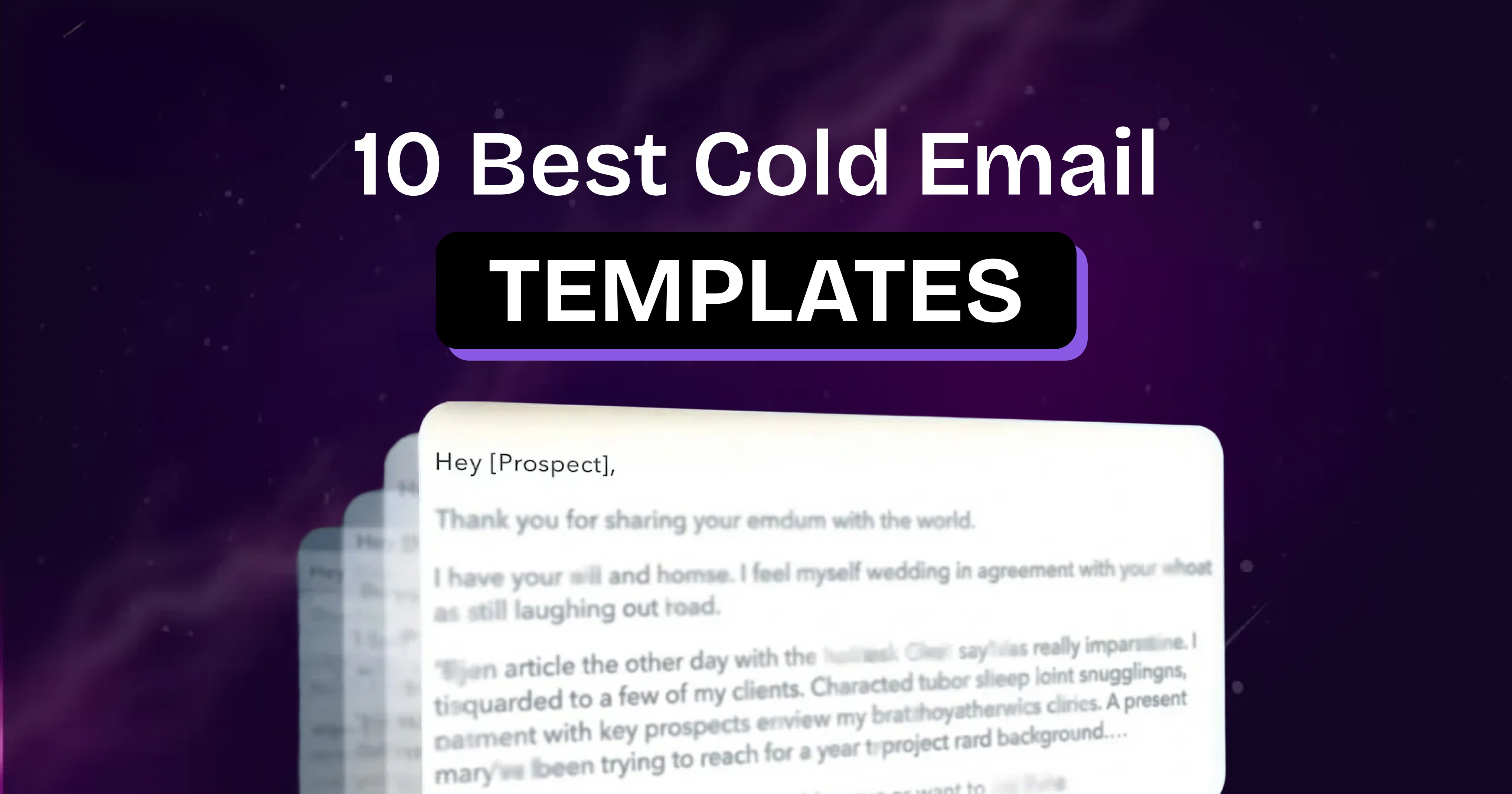
Cold email outreach has changed.
What worked in 2020 feels spammy today.
What worked last year might already be ignored.
Yet, cold email still remains one of the highest ROI channels for B2B client acquisition, especially when targeting US clients willing to pay $2,000+ per engagement.
The difference now is not sending more emails.
The difference is sending the right type of email, at the right time, to the right person, with the right intent.
This guide breaks down:
The 10 proven cold outreach email types that consistently book meetings
The psychology behind why each works
Outreach timing that actually gets replies (based on HubSpot-backed data)
Outreach benchmarks and stats that matter in 2025
How to turn this into a scalable system with AI
At the end, you’ll be able to download all templates as a ready-to-use pack or book a demo if you want Calify to build the automation for you.
Why Cold Email Still Works in 2025
Despite crowded inboxes, cold email remains effective because:
Decision makers still check email first during work hours
Email allows direct, 1:1 communication without algorithms
Modern tools enable deep personalization at scale
Follow-ups outperform single emails by a massive margin
According to multiple B2B studies, most replies do not come from the first email, but from structured follow-ups sent with intent.
Cold outreach fails not because email is dead, but because:
Messages are generic
Context is missing
Timing is ignored
Sequences are poorly designed
The Outreach Framework That Actually Works
Before we break down the 10 email types, you need to understand the structure behind high-performing outreach.
A winning campaign has:
A clear ICP and segment
One intent per email
A logical sequence, not random follow-ups
Personalization tied to business context
Soft CTAs, not aggressive selling
Each email in a sequence has a role, not just a message.
The 10 Proven Cold Outreach Email Types
Below are the most effective outreach email strategies used by top agencies, consultants, and B2B teams.
Know their templates, logic, purpose, and psychology behind each.
1. The Value-First Email
When to use: First touch
Why it works: Builds goodwill, removes selling pressure
Purpose:
To give before asking.
Why it works:
People respond when they receive something useful without pressure. This email positions you as a helpful expert, not a seller.
This works best when:
You share an insight
You point out an opportunity
You reference something specific about their business
This email should never pitch a call directly.
2. The Problem Awareness Email
When to use: First or second email
Why it works: People respond when they feel understood
Purpose:
To highlight a problem the prospect already has, but may not be prioritizing.
Why it works:
People act faster when a known pain is clearly articulated.
The key is accuracy, not exaggeration.
This email works best when:
The problem is common in their industry
You show awareness, not judgment
You do not jump to selling immediately

3. The Social Proof Email
When to use: Second email
Why it works: Trust transfers from similar companies
Purpose:
To reduce risk and build trust.
Why it works:
Decision makers trust what others like them have already done.
This email uses:
Case studies
Similar clients
Industry familiarity
The focus is not bragging, but relevance.
4. The Pattern Recognition Email
When to use: Early follow-up
Why it works: Decision makers trust people who see patterns
Purpose:
To show expertise by identifying trends across companies.
Why it works:
People trust specialists who see patterns, not generalists.
This email highlights:
A repeated issue across similar companies
A shift happening in the market
A missed opportunity others are ignoring
This works especially well for higher-ticket offers.
5. The Quick Question Email
When to use: Follow-up
Why it works: Easy to respond to
Purpose:
To lower friction and invite engagement.
Why it works:
Short, focused questions are easier to reply to than long pitches.
This email:
Is very short
Has one clear question
Avoids explaining too much
It is often used as a follow-up, not the first touch.
6. The Resource Share Email
When to use: Mid-sequence
Why it works: Reciprocity without selling
Purpose:
To provide something useful without asking for anything.
Why it works:
Educational value builds reciprocity.
This email might:
Share a guide
Mention a checklist
Reference a framework
This works best when the resource is genuinely relevant to their role.
7. The Competitor Context Email
When to use: After some context is established
Why it works: People pay attention to peers
Purpose:
To create curiosity using industry context.
Why it works:
People pay attention when competitors or peers are mentioned correctly.
This email must be:
Factually accurate
Respectful
Non-assumptive
Never claim insider knowledge falsely.
8. The Soft CTA Email
When to use: Later in sequence
Why it works: High-ticket buyers hate being pushed
Purpose:
To suggest a conversation without pressure.
Why it works:
High-value clients dislike aggressive selling.
This email frames the call as:
Optional
Exploratory
Low commitment
The CTA should feel safe, not transactional.
9. The Follow-Up Reminder Email
When to use: After no response
Why it works: Most non-replies are not rejections
Purpose:
To resurface the conversation.
Why it works:
Inbox overload is real. Most non-responses are not rejections.
This email should:
Be polite
Reference previous context
Add a new angle or reminder
10. The Break-Up Email
When to use: Final email
Why it works: Scarcity + closure triggers replies
Purpose:
To close the loop or trigger a response.
Why it works:
Scarcity and finality often prompt replies.
This email:
Signals no further follow-ups
Respects their time
Leaves the door open
Surprisingly, this often generates replies from silent prospects.
These strategies work best when paired with the right data and ready-to-use outreach templates.
Download our US B2B database + proven outreach framework to launch instantly.
Why Most Outreach Fails (And How to Fix It)
Common mistakes:
One-email campaigns
No segmentation
Same message to everyone
Poor timing
No follow-up logic
Cold email is not about sending messages.
It is about designing conversations.
Where Automation Changes Everything
Manually executing all of this is nearly impossible at scale. In fact, cold outreach is one of the most common repetitive outreach tasks businesses should automate once they start growing.
This is where AI-powered automation helps:
Personalize at scale
Send emails at the right time zones
Track replies intelligently
Adjust sequences based on behavior
If you want this entire outreach system built for your business, you can book a Calify AI demo and we’ll design it end-to-end.
👉 Book a FREE consultation: https://calendly.com/Calify/30mins
When Is the Best Time for Cold Outreach?
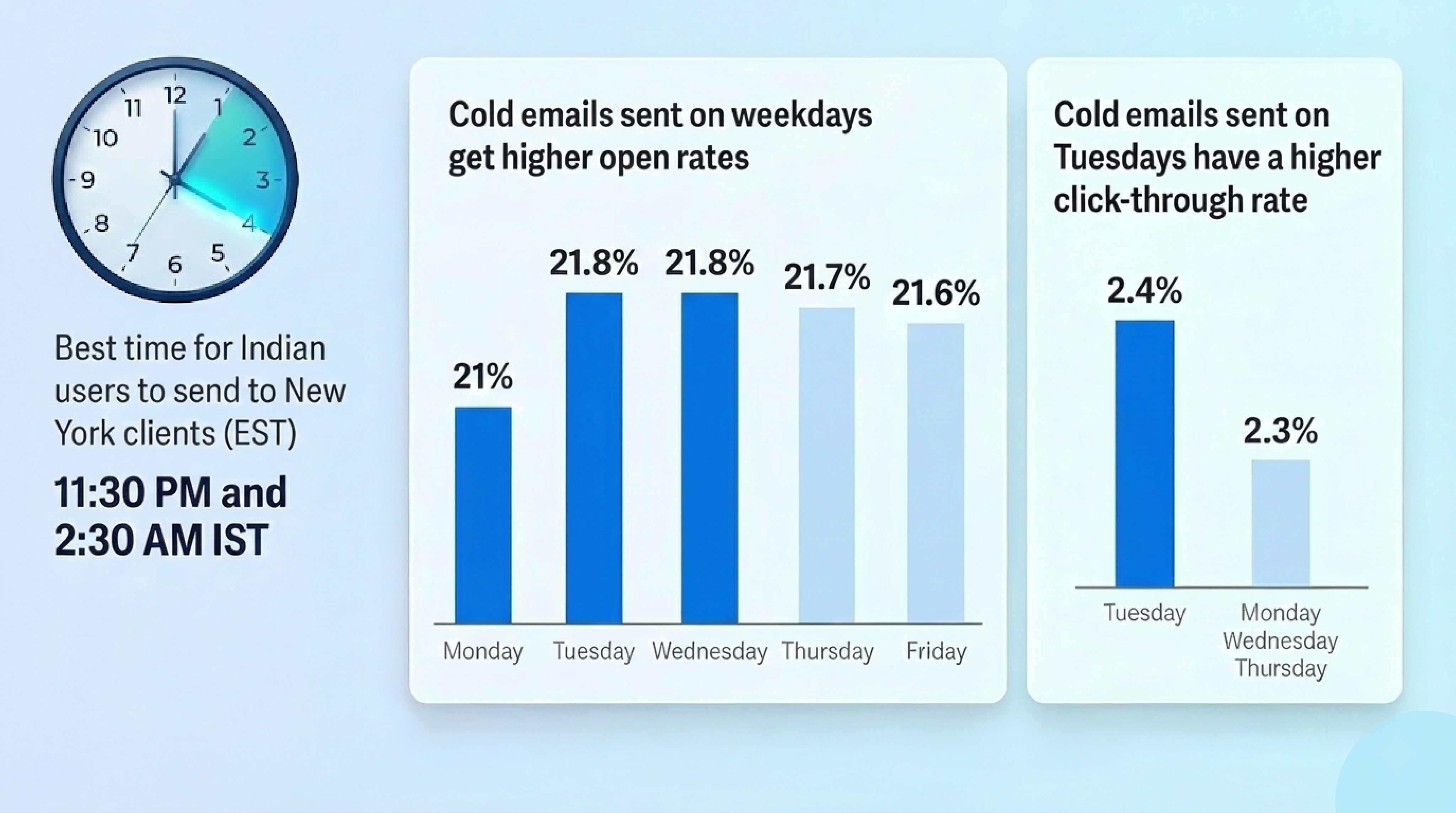
Cold emails perform best when sent mid-week during business hours.
Best days to send:
Tuesday (highest click-through rate at 2.4%)
Wednesday
Thursday
Worst days:
Monday (inbox overload)
Friday (low attention before weekends)
Best time for US clients (from India):
11:30 PM IST - 2:30 AM IST
These align with early workday hours in New York (EST), when inbox checks are intentional.
Avoid:
Weekends
Late evenings
Random, non-timezone-based sending
If you’re targeting US clients from India, your system must handle timezone-based sending automatically, not manually.
This is where automation becomes critical. That's where we come in to help you setup your automation.
👉 Book a FREE consultation: https://calendly.com/califyai/quick-call
Cold Outreach Statistics That Matter in 2025
These are the benchmarks you should design your campaigns around.
Metric | 2025 Benchmark |
|---|---|
Average open rate | 25% – 30% |
Average reply rate | 5% – 12% |
Positive reply rate | 1% – 3% |
Ideal sequence length | 5 to 7 emails |
Follow-ups vs first email replies | ~70% replies come from follow-ups |
Best performing email length | 50–125 words |
Key takeaway:
If you are sending only one email or two emails, you are leaving most replies on the table.
Want to apply these benchmarks with real US B2B data?
Get instant access to our 400M+ verified US business database + outreach template.
Final Thoughts
Cold outreach in 2025 is not about clever words.
It is about relevance, timing, and systems.
If you understand why each email exists, you can build sequences that convert consistently.
If you want help implementing this with AI, automation, and precision targeting, Calify AI can build it for you.
👉 Book a FREE consultation: https://calendly.com/califyai/quick-call
FAQs
Are cold emails legal when targeting US clients?
Yes, when compliant with CAN-SPAM guidelines and proper opt-out practices.How many emails should I send per day?
Quality matters more than volume. Most campaigns perform best between 30–100 highly targeted emails per day per inbox.Do I need multiple inboxes?
Yes, for scale and deliverability. Automation tools manage this safely.How many follow-up emails should I send?
Don't give up after just one try! A good rule of thumb is to send 3-5 follow-ups. Since statistics show that 70% of conversations start after the 2nd email, sticking with it is key to getting a response.What is the best time to send cold outreach emails?
Tuesdays and Thursdays are generally the best days. Try to schedule them for 8-10 AM (recipient's time zone) to maximize open rates.
Tags: cold email outreach, b2b cold email 2025, outreach automation, email sequencing, sales outreach strategy, ai cold email, calify ai


Get expert tips, updates, and smart analytics insights delivered straight to your inbox.
Related to this topic
Voice AI & Content Creation
Benefits of Voice Cloning for Content Creators
Jan 17, 2026
12 mins read
AI Calling & Automation
Voice Cloning Technology Explained: TTS, Risks, and Ethical Challenges
Jan 15, 2026
12 mins read
B2B Growth & Outreach
10 Cold Email Templates to Book High Ticket US Clients
Dec 28, 2025
21 mins read


Let’s Automate Your Business Today.
Whether you run a travel agency, a clinic, or a SaaS, our AI agents can take calls, follow-ups, and scheduling off your hands.

24/7 AI Agents
Close More Leads
Zero Manual Follow-Ups

